


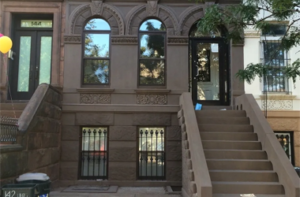
Some violations are minor. A sign installed without approval. A light fixture that doesn’t belong. Others are serious. Class C violation NYC refers to the most severe type, often involving significant changes to character-defining features like cornices, stoops, or storefronts. These carry the highest penalties.
NYC landmark building permit violation means someone did work without getting the proper approvals first. It doesn’t matter if it was you or the previous owner. The violation stays with the property.
The severity determines what happens next. Minor issues might be resolved with a simple application. Major ones could require hearings, fines, and significant corrective work.
How to Find Out if Your Property Has LPC Violations
You might already know about a violation because a letter arrived. But what if you’re buying a property? Or what if you’re not sure whether something from years ago is still on the books?
How do I check if my building has LPC violations? There are a few ways to find out.
Option 1: LPC violation search througYou own a piece of New York history. A brownstone in Brooklyn, a townhouse in Manhattan, maybe something in a historic district you didn’t even know existed. Then one day a letter arrives. The Landmarks Preservation Commission has found a violation on your property.
What is an LPC violation? It’s what happens when work gets done without approval. A window replaced with the wrong material. A door changed without a permit. A sign installed where it shouldn’t be. And now you’re on the hook to fix it.
Here’s the thing about LPC violation penalties NYC. They add up fast. Ignoring the problem doesn’t make it go away. It makes it worse. This guide walks you through exactly what to do when that letter arrives.
Understanding LPC Violations in NYC
Before you can fix a violation, you need to understand what you’re dealing with. The LPC doesn’t issue violations randomly. They find work that shouldn’t have happened.
LPC violations fall into a few main categories:
| Violation Type | What It Means | Example |
| Unauthorized work | Changes made without an LPC permit | Replacing windows, altering a stoop |
| Noncompliance | Work that didn’t follow an approved permit | Wrong materials, incorrect dimensions |
| Maintenance issues | Failure to keep the property in good repair | Crumbling mortar, peeling paint on masonry |
| Demolition | Partial or full destruction of a landmark | Removing a cornice, tearing down a wall |
h official channels
Start with DOB’s Building Information System (BIS) . It’s the Department of Buildings database that tracks permits, complaints, and violations. Search by address and look for any open LPC violations listed. Not everything shows up here, but it’s a good first step.
Option 2: NYC LPC designation reports
The LPC maintains records on all designated properties. NYC LPC designation reports include the original designation documents and any subsequent actions. They won’t always list active violations, but they tell you what’s protected on your property.
Option 3: Records Access Request
If you need official documentation, file a Records Access Request with the LPC. This gives you copies of any violation notices, permits, or correspondence tied to your property. It takes time, but it’s the most complete option.
LPC records request forms are available on the LPC website. You’ll need your property address and any details you have about potential violations.
Option 4: NYC Preservation Society and other resources
Groups like the NYC Preservation Society sometimes offer guidance on navigating landmark issues. They’re not an official source, but they can point you in the right direction.
The key is not to guess. Find out exactly what you’re dealing with before you do anything else.
What Happens if You Ignore an LPC Violation
Some people get that first letter and hope it just goes away. It won’t. The process is designed to keep moving until the problem gets fixed.
What happens if you ignore an LPC violation? Here’s how it typically unfolds.
Step 1: Warning Letter
The LPC sends a warning letter describing the violation and giving you a chance to fix it. This is your first grace period. If you act now, you can resolve the issue without paying a fine. Ignoring it moves you to step two.
Step 2: Notice of Violation NYC
If you don’t respond, the LPC issues a Notice of Violation NYC. This isn’t just another warning. It’s a formal summons that sets a hearing date at the Office of Administrative Trials and Hearings (OATH) .
Step 3: OATH Hearing
At the hearing, an administrative law judge hears the case. If they find a violation occurred, they impose fines. The amount depends on the severity. Minor issues might cost a few hundred dollars. Major ones can hit five figures.
Step 4: Stop Work Order
If work is still ongoing and illegal, the LPC can issue a Stop Work Order. Everything halts until you sort out the violation. Ignoring a Stop Work Order brings additional daily fines.
Step 5: Subsequent Violations
If you still don’t fix the problem, the LPC can issue additional notices. Each one can carry new fines, and the grace periods disappear. You’re now in a cycle that only ends when you comply.
LPC violation penalties NYC aren’t designed to raise money. They’re designed to make you pay attention and fix what’s wrong. The system gives you multiple chances. Take one.
Step-by-Step Guide: How to Remove LPC Violations in NYC
You’ve got a violation. Now you need to make it go away. There are two paths forward, depending on what happened and what’s possible.
How to remove LPC violations in NYC comes down to two choices: correct the work or legalize it.
Option A: Correct the Work
If the work that caused the violation shouldn’t be there, you remove it. This is the simplest path when something was done wrong and can’t be approved after the fact.
- Remove the unauthorized alteration. That might mean taking down an illegal sign, replacing a wrong window with the correct one, or restoring a damaged cornice.
- Once the work is undone, you submit an application through LPC project portals to show the correction.
- Request a final inspection and a Notice of Compliance confirming the violation is resolved.
Option B: Legalize the Work
Sometimes the work is actually fine. It just didn’t get approved first. In that case, you can apply to legalize it retroactively.
- Submit an application through Portico for a post-approval permit.
- Provide documentation showing what was done and why it should be acceptable.
- If the LPC agrees, they issue a retroactive permit and clear the violation.
LPC violation removal NYC depends on which option fits your situation. The LPC enforcement staff can help you figure out which path makes sense.
How long does it take to remove house violations in NYC? Simple corrections might take a few weeks. Complex cases involving hearings can stretch for months. The faster you start, the faster it ends.